

Artificial Intelligence is no longer a futuristic concept—it’s a core capability of modern software. From image recognition and speech processing to conversational interfaces and predictive analytics, AI is transforming how applications interact with users and data.
For developers, especially those building on Microsoft Azure, Azure offers a powerful and accessible ecosystem of AI services. These services allow teams to add intelligence to applications without needing deep data science expertise, while still offering flexibility for advanced machine learning scenarios.
This guide provides a comprehensive overview of Azure AI services—covering Cognitive Services, Azure OpenAI Service, and Azure Machine Learning—and explains how .NET developers can integrate them seamlessly into real-world applications.
The Azure AI Ecosystem at a Glance
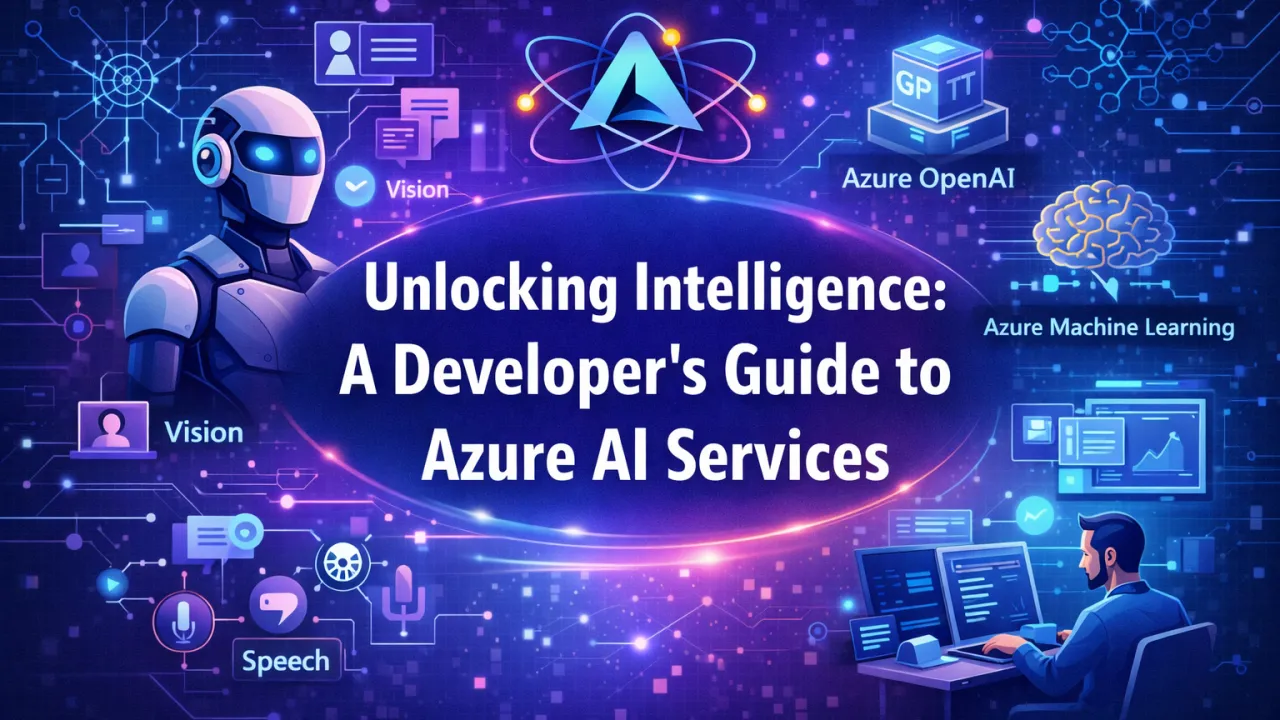
Azure AI services can be broadly grouped into three categories:
- Prebuilt AI (Cognitive Services) – Ready-to-use APIs for vision, language, speech, and decision-making
- Generative AI (Azure OpenAI Service) – Large language models for reasoning, content generation, and conversational AI
- Custom AI (Azure Machine Learning) – End-to-end platform for building, training, and deploying ML models
Together, these services cover the full spectrum of AI needs—from simple API calls to advanced model lifecycle management.
Azure Cognitive Services: Prebuilt Intelligence for Everyday Use
Azure Cognitive Services provide pre-trained AI models exposed through simple REST APIs and SDKs. They are ideal for developers who want to add intelligence quickly, without training models from scratch.
Vision Services
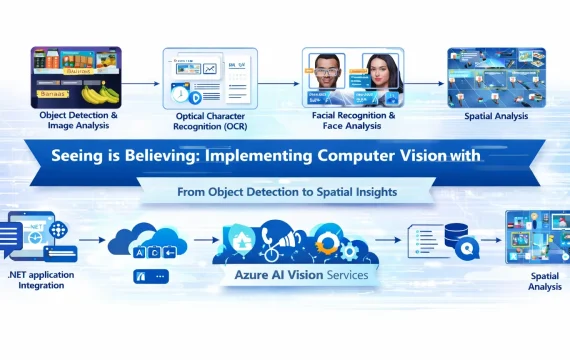
Azure Vision services enable applications to understand and analyze visual content. Common capabilities include image classification, object detection, OCR (optical character recognition), and facial analysis.
Use cases:
- Extracting text from invoices or receipts
- Detecting objects in images or videos
- Moderating user-uploaded content
For .NET developers, Vision APIs can be consumed easily using official SDKs, allowing image analysis to be integrated directly into ASP.NET or desktop applications.
Language Services
Azure Language services enable natural language understanding and processing. These include sentiment analysis, key phrase extraction, entity recognition, and conversational language understanding.
Use cases:
- Analyzing customer feedback and reviews
- Categorizing support tickets automatically
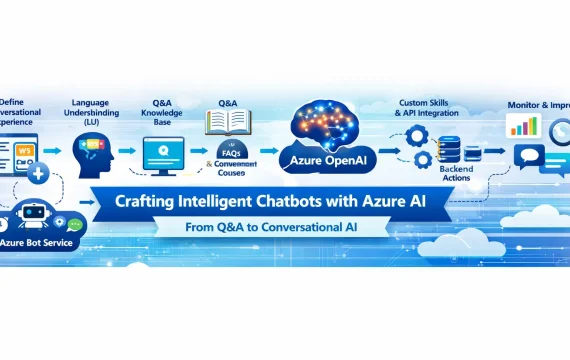
- Building chatbots that understand intent
.NET developers can integrate language APIs into web APIs or background services to analyze text in real time or batch workflows.
Speech Services
Azure Speech services convert speech to text, text to speech, and enable speech translation across languages.
Use cases:
- Voice-enabled applications
- Real-time transcription for meetings or calls
- Accessibility features for users with disabilities
Speech services integrate seamlessly into .NET applications, enabling both cloud-based and real-time streaming scenarios.
Azure OpenAI Service: Generative AI at Enterprise Scale
Azure OpenAI Service brings powerful large language models into the Azure ecosystem, offering secure, compliant access to generative AI capabilities.
With Azure OpenAI, developers can build applications that:
- Generate human-like text
- Summarize documents
- Answer complex questions
- Power intelligent chat and copilots
For .NET developers, Azure OpenAI integrates through REST APIs and SDKs, making it easy to embed generative AI into existing applications. Combined with orchestration tools like Semantic Kernel, these models can reason, plan, and interact with application logic—going far beyond simple chat interfaces.
Use cases include:
- AI-powered customer support assistants
- Intelligent search and knowledge retrieval
- Automated report and content generation
Azure Machine Learning: Custom AI for Advanced Scenarios
While Cognitive Services and Azure OpenAI provide prebuilt intelligence, Azure Machine Learning is designed for teams that need full control over the machine learning lifecycle.
Azure Machine Learning enables developers and data scientists to:
- Train custom ML models using Python or R
- Experiment with algorithms and hyperparameters
- Deploy models as scalable web services
- Monitor model performance in production
For .NET applications, Azure ML models can be consumed via REST endpoints, allowing C# services and APIs to leverage custom-trained intelligence without embedding ML logic directly in the app.
Use cases:
- Fraud detection systems
- Recommendation engines
- Predictive analytics and forecasting
Integrating Azure AI into .NET Applications
One of Azure’s biggest strengths is how seamlessly AI services integrate into .NET-based systems.
.NET developers can:
- Call Azure AI services via REST APIs or official SDKs
- Secure access using Managed Identities and Azure Key Vault
- Deploy AI-enabled applications using Azure App Service, Functions, or containers
- Combine AI outputs with business logic, workflows, and data stores
This allows AI to become a natural extension of application architecture, rather than a separate experimental component.
Choosing the Right Azure AI Service
Selecting the right service depends on your goals:
- Use Cognitive Services when you need fast, reliable AI for common tasks
- Use Azure OpenAI Service for conversational, generative, and reasoning-based experiences
- Use Azure Machine Learning when you need custom models tailored to your data
In many real-world applications, these services are combined—for example, using Vision to extract text, OpenAI to summarize it, and Azure ML to predict outcomes.
Best Practices for Developers
When building AI-powered applications on Azure:
- Start with prebuilt services before building custom models
- Secure AI endpoints with Azure AD and Managed Identities
- Monitor usage, performance, and cost
- Keep humans in the loop for critical decisions
- Treat prompts, models, and pipelines as versioned assets
Responsible AI design ensures applications remain trustworthy, scalable, and compliant.
Final Thoughts
Azure AI services empower developers to build intelligent, responsive, and future-ready applications without reinventing the wheel.
By combining Cognitive Services, Azure OpenAI Service, and Azure Machine Learning, .NET developers can unlock new levels of automation, personalization, and insight—while staying within a secure, enterprise-grade cloud platform.
AI is no longer reserved for specialists. With Azure, intelligence becomes just another service—ready to be integrated into every application you build.