

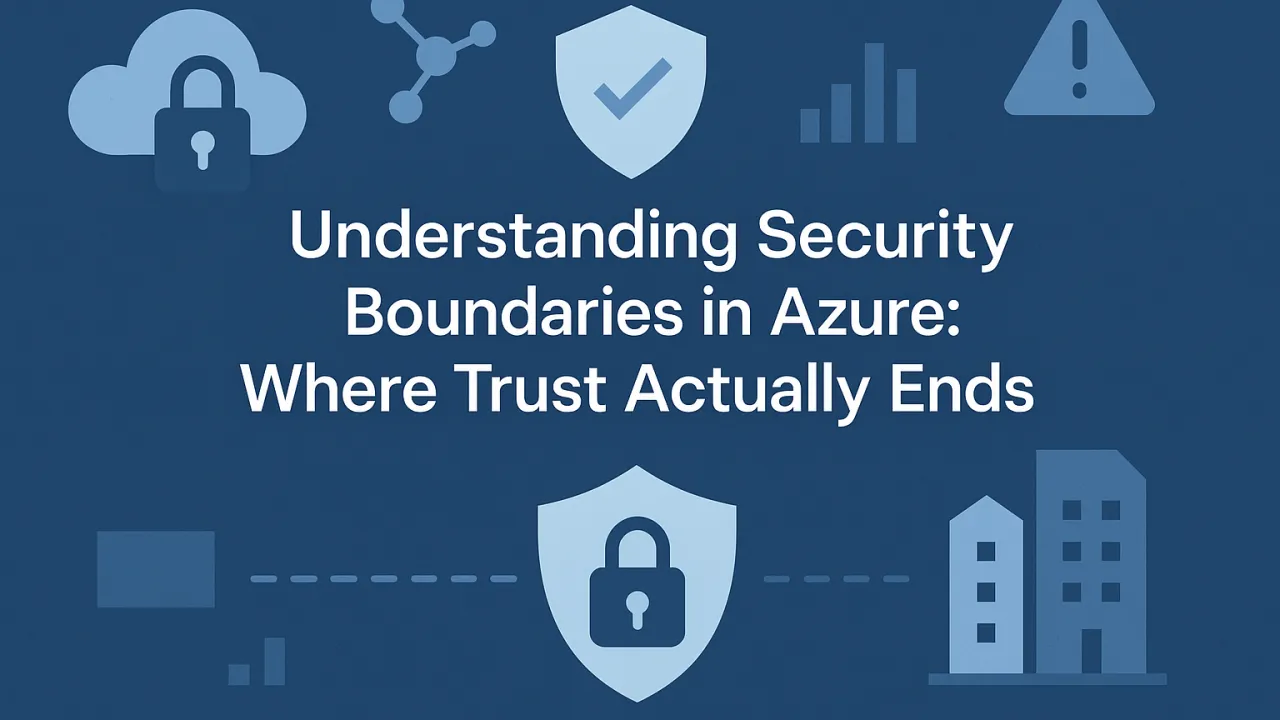
In an era dominated by rapid digital transformation, understanding security boundaries in cloud environments has never been more crucial. Azure, one of the leading cloud service providers, offers a plethora of tools and services designed to enhance security. However, it's imperative to acknowledge that even the most sophisticated systems have limitations. Trust and security boundaries define where end-to-end protections end and where potential vulnerabilities may arise.
Security boundaries in Azure revolve around several key concepts, including identity management, data protection, and the shared responsibility model. Each of these components plays a significant role in shaping the overall security landscape. By understanding these boundaries, organizations can better frame their risk management strategies and enhance their security postures.
Firstly, identity management represents a primary security boundary. Azure Active Directory offers a comprehensive identity and access management solution, allowing organizations to define who has access to what resources. However, this trust is not absolute. Weak passwords, social engineering attacks, and insider threats pose vulnerabilities. Thus, organizations must continuously monitor identity behaviors and implement robust multi-factor authentication.
Data protection is another crucial area. Azure provides a variety of tools to secure data at rest and in transit. Encryption plays an essential role here, yet it’s vital to remember that organizations share the responsibility for securing sensitive data. While Azure protects the physical infrastructure, the responsibility to encrypt data before it enters the cloud often lies with the organization. This duality of responsibility reinforces the need for ongoing training and awareness regarding data security practices among employees.
The shared responsibility model further highlights the importance of understanding security boundaries. In this framework, Azure is responsible for the security of the cloud infrastructure, while organizations must secure the applications and data they deploy. Here are a few essential insights about the shared responsibility model:
- Azure safeguards the infrastructure, but user-configured settings can create vulnerabilities.
- Regular reviews of security configurations are necessary to prevent misconfigurations.
- Updates and patches to software applications are the organization's responsibility.
- Continuous monitoring of access logs can yield insights into potential security breaches.
In conclusion, the effectiveness of Azure's security measures significantly depends on the decisions made by organizations. Navigating the complexities of security boundaries requires a holistic approach, combining technology with robust governance frameworks. Organizations must set clear boundaries and continuously reassess their security measures to ensure that trust does not become a vulnerability. By understanding where trust ends and vigilance begins, businesses can fortify their defenses against the evolving landscape of cyber threats.