
Blogs
What are you working on?
Filter posts by topic
Latest
All posts
Showing 37–42 of 81 posts

Design Patterns 4 min read
The Repository Pattern in .NET: Good Practice or Anti-Pattern?
The Repository Pattern has been widely used in .NET applications for many years as a way to abstract data access and separate business logic from persistence concerns. Historically, it played an important role in layered architectures by shielding the domain from direct database interaction.

Design Patterns 5 min read
CQRS and MediatR in .NET: Simplifying Complex Domain Logic
As .NET applications grow in size and complexity, one of the biggest challenges developers face is keeping domain logic understandable and maintainable. Features accumulate, business rules evolve, and suddenly a once-simple service layer becomes a tangled web of mixed responsibilities.
Azure & Cloud 3 min read
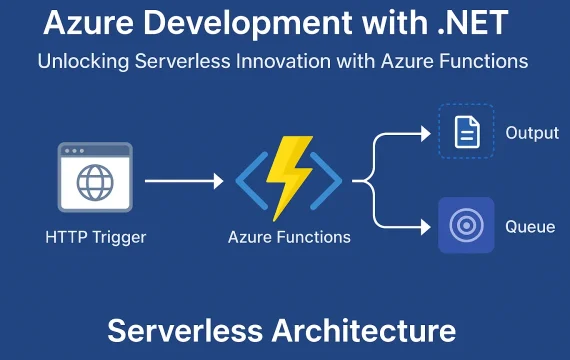
Azure Development with .NET: Unlocking Serverless Innovation with Azure Functions
In the evolving world of cloud computing, organizations are shifting away from traditional infrastructure management toward serverless architectures. The promise of serverless computing is simple yet transformative: write your application logic, deploy it, and let the cloud handle scaling, availability, and infrastructure provisioning.
Design Patterns 4 min read
Beyond the Basics: Essential Design Patterns for .NET Developers
As applications grow in scale and complexity, writing code that merely works is no longer enough. Modern .NET development demands solutions that are flexible, maintainable, and scalable — not just for today, but for the evolution that naturally follows.

Design Patterns 4 min read
The Single Responsibility Principle (SRP): Writing Cleaner, More Focused C# Classes
In software development, the smartest solutions are rarely the most complex — they are the ones that stay simple over time. As projects grow, features evolve, and teams scale, the clarity of code becomes just as important as functionality. This is where the Single Responsibility Principle (SRP) steps in as a foundational guide for creating clean, understandable, and maintainable C# applications.
Design Patterns 4 min read
Demystifying the Dependency Inversion Principle (DIP) in .NET with IoC Containers
In modern .NET development, creating software that is flexible, testable, and easy to maintain is more important than ever. As applications evolve, tightly coupled components can quickly become a barrier to adding new features, scaling systems, or improving performance.