
Blogs
What are you working on?
Filter posts by topic
Latest
All posts
Showing 7–12 of 12 posts
Architecture 3 min read
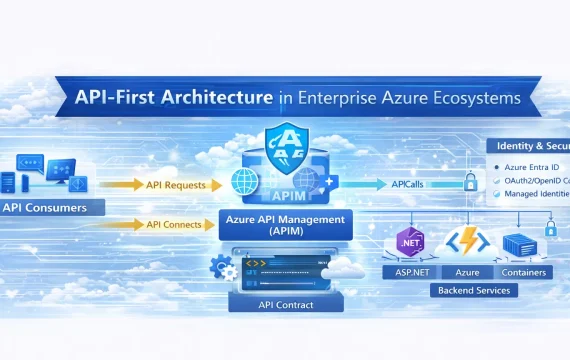
API-First Architecture in Enterprise Azure Ecosystems
In modern enterprise Azure ecosystems, APIs are no longer just technical integration points—they are the primary interface through which systems, teams, and partners interact. As organizations scale, the number of consumers, platforms, and dependencies grows rapidly. Without a clear API strategy, this growth leads to tight coupling, fragile integrations, and slow delivery. API-first architecture addresses this challenge by treating APIs as first-class products rather than implementation by-products.
Architecture 4 min read
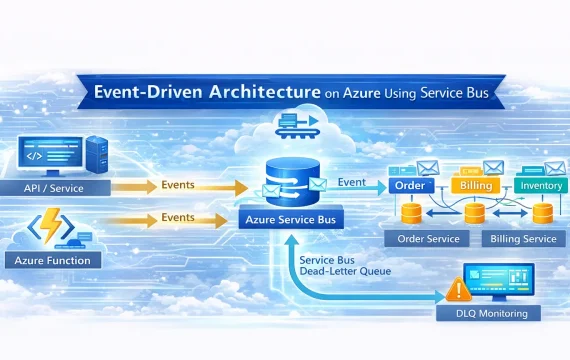
Event-Driven Architecture on Azure Using Service Bus
As systems grow in scale and complexity, tightly coupled, synchronous architectures start to crack. Small failures cascade. Scaling becomes inefficient. Teams slow each other down.
Architecture 4 min read
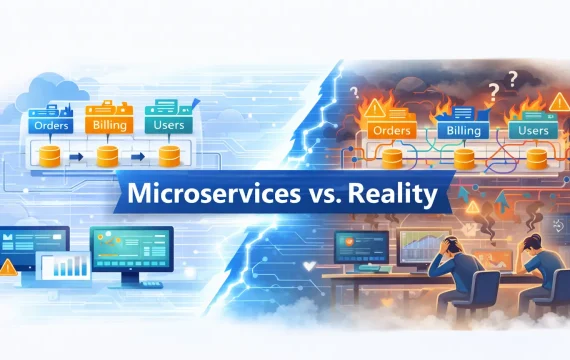
When NOT to Use Microservices (Lessons from Large Azure Systems)
Microservices are often presented as the default architecture for modern cloud systems. Conferences promote them. Blog posts praise them. Architecture diagrams glorify them.
Architecture 4 min read
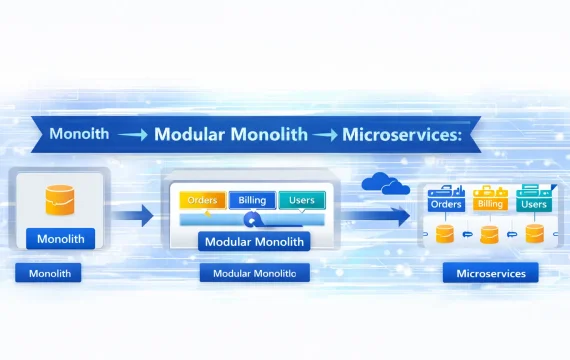
Monolith → Modular Monolith → Microservices: A Practical Azure Journey
Modernizing applications is rarely a straight jump from a legacy monolith to microservices. Yet many teams try to make that leap—and pay the price in complexity, instability, and operational overhead.
Architecture 3 min read
Designing Cloud-Native Systems with .NET & Azure: What Most Teams Get Wrong
Cloud-native architecture isn’t about lifting existing applications into the cloud—it’s about rethinking how systems are designed, built, deployed, and operated.
Architecture 4 min read
Microservices with .NET: Best Practices for Building Resilient Distributed Systems
Microservices have moved beyond buzzword status. They are now a foundational strategy for enterprises building software that needs to scale, evolve quickly, and remain resilient in the face of constant change. At the core of this shift is the ability to decouple functionality, deploy independently, and iterate faster—all while maintaining high performance and reliability.