


Microservices have moved beyond buzzword status. They are now a foundational strategy for enterprises building software that needs to scale, evolve quickly, and remain resilient in the face of constant change. At the core of this shift is the ability to decouple functionality, deploy independently, and iterate faster—all while maintaining high performance and reliability.
With the release of .NET 8, Microsoft has equipped developers and architects with a mature, high-performance platform that is exceptionally well-suited for building and operating microservices. From minimal APIs to container-native capabilities and built-in resilience tools, .NET 8 is helping development teams rethink how distributed systems should be built.
At Prilixor, we partner with organizations to modernize legacy applications, break down monoliths, and create microservice-based platforms that deliver results. Based on our hands-on experience, here are the core best practices every team should follow when building microservices with .NET:
1. Choose the Right Communication Protocols Microservices need efficient communication between services. gRPC is the go-to option for high-performance, low-latency internal communication, especially when performance matters. It supports strong typing and contract-first development. For services that interact with external clients, HTTP/REST remains ideal due to its wide adoption and ease of integration.
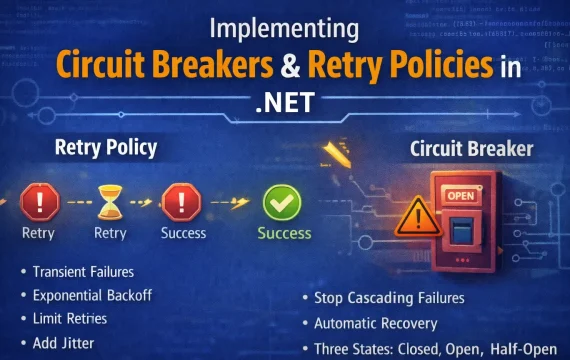
2. Design for Failure, Not Perfection In a distributed environment, failures are inevitable. Instead of trying to avoid them, design systems to handle them gracefully. Utilize retry policies, circuit breakers, and fallback mechanisms to improve resilience. Libraries like Polly are deeply integrated into .NET and make it simple to implement robust fault-handling strategies.
3. Maintain Data Ownership per Microservice Each microservice should manage its own data store. This approach enforces loose coupling and ensures autonomy. Avoid shared databases. To maintain data consistency across services, embrace event-driven patterns, domain events, or event sourcing, especially when business workflows span across services.
4. Build Lightweight and Fast APIs .NET 8 introduces Minimal APIs, which drastically reduce boilerplate and startup overhead. They are ideal for microservices that need to expose clean, lightweight endpoints without the complexity of a full MVC setup. The result is better performance and faster development cycles.
5. Embrace Containerization and Orchestration Early Microservices thrive in containerized environments. Use Docker to package services and Kubernetes for orchestration and scalability. .NET 8 provides out-of-the-box support for containers and integrates natively with cloud platforms like Azure Kubernetes Service (AKS) and Azure Container Apps.
6. Make Observability a First-Class Citizen Without visibility, managing microservices at scale becomes guesswork. Implement structured logging, distributed tracing, and real-time metrics from the very beginning. .NET 8 integrates smoothly with OpenTelemetry, Prometheus, and cloud-native tools like Azure Monitor and Application Insights, making end-to-end observability achievable.
Why .NET 8 is a Game-Changer for Microservices
.NET 8 isn’t just an upgrade—it’s a shift in how modern .NET applications are built and scaled. Key benefits include:
- Native AOT (Ahead-of-Time Compilation) for lightning-fast cold starts and minimal runtime overhead
- Support for gRPC, Minimal APIs, SignalR, and background services in one consistent platform
- Superior performance benchmarks across various tech stacks (especially CPU-bound workloads)
- First-class container support that simplifies CI/CD pipelines and DevOps automation
- Cross-platform compatibility for Windows, Linux, and macOS deployments
Whether you're starting fresh or looking to decompose a monolithic system into independent services, .NET 8 provides the tools and performance you need to succeed.
I’ve helped enterprises:
- Transition legacy platforms to distributed cloud-native systems
- Define microservice boundaries based on domain-driven design
- Build CI/CD pipelines for independent service deployment
- Enable DevOps workflows with GitHub Actions, Azure DevOps, and Kubernetes
- Maintain resilience and performance at scale
If you're thinking of moving to microservices or modernizing your current architecture, don’t go it alone. Let’s build a distributed system that’s resilient, cloud-ready, and built for the future.