

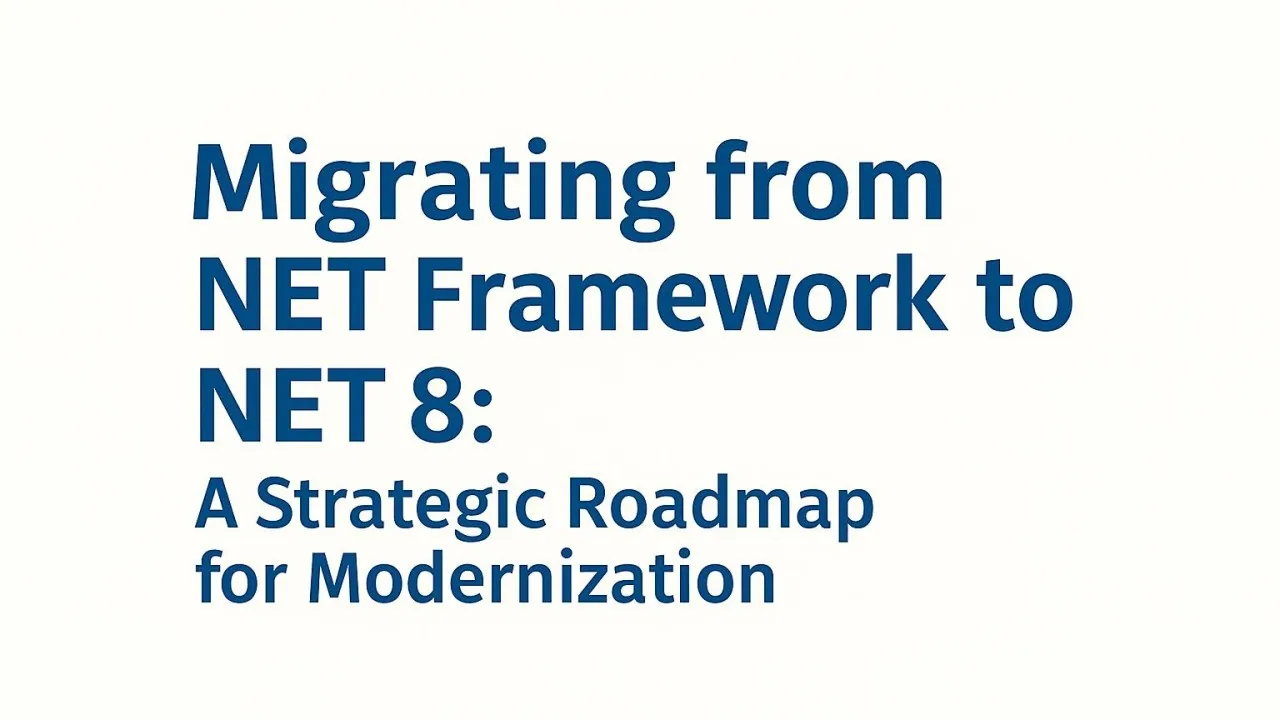
In today’s fast-paced digital economy, innovation is no longer a luxury—it’s a necessity. Yet many organizations still rely on legacy systems built on the traditional .NET Framework, limiting their agility, scalability, and ability to compete. At Prilixor, we empower enterprises to break free from these limitations by transitioning to the future-ready .NET 8 platform.
This isn’t just a routine version upgrade. Migrating to .NET 8 is a transformation—a rethinking of how your application is built, deployed, and scaled. Whether you’re modernizing a tightly coupled monolithic system or preparing for a cloud-first future, a strategic migration roadmap is essential to maximize long-term value.
🚀 Why Migrate to .NET 8?
1. Cross-Platform Freedom .NET 8 is a unified platform that works seamlessly across Windows, Linux, and macOS. This enables developers to leverage containerization (Docker/Kubernetes), CI/CD pipelines, and DevOps automation without being locked into a single operating system. It’s a foundational step toward true cloud-native development.
2. Modern Performance Gains With features like Native AOT (Ahead-of-Time compilation), JIT enhancements, and runtime improvements, .NET 8 drastically boosts app performance. You’ll see faster startup times, reduced memory usage, and lower infrastructure costs—especially in high-scale and serverless environments.
3. Access to Modern Libraries & Tooling .NET 8 unlocks a vast ecosystem of tools and libraries designed for today’s development needs. Build interactive front-ends with Blazor, use gRPC for high-performance communication, or streamline APIs with Minimal APIs. Plus, you get native support for Azure, Entity Framework Core, and OpenTelemetry—perfect for observability in distributed systems.
🏗️ Key Migration Strategies
A successful migration doesn’t happen overnight. It requires careful planning and execution. At Prilixor, we follow a phased, tool-assisted approach:
- Assessment First: Begin with a comprehensive audit of your codebase using tools like the .NET Upgrade Assistant. Identify outdated APIs, architecture bottlenecks, and third-party library dependencies.
- Compatibility Shims: During transitional phases, use compatibility layers to bridge missing APIs or components that don’t yet exist in .NET 8.
- Modularization Matters: Break your application into manageable services or modules. This not only simplifies migration but also enables adoption of microservices, API-first architecture, and future flexibility.
⚠️ Common Migration Challenges
Migration is rewarding, but not without hurdles:
- Third-party Library Gaps: Some older NuGet packages may lack .NET 8 support, requiring replacements or rewrites.
- UI Challenges: Converting legacy WebForms, WPF, or WinForms apps to a modern web-based or cross-platform UI can be complex.
- Testing & Business Logic Validation: Ensure comprehensive testing and QA cycles to avoid regression issues during the transition.
We mitigate these risks with automated testing, cloud-readiness assessments, and phased rollout strategies to ensure zero downtime and maximum continuity.
🏁 Modernization = Strategic Advantage
Migrating to .NET 8 is not just about rewriting code—it’s about reimagining your application’s potential. With enhanced performance, cross-platform deployment, and full cloud readiness, your business gains the tools it needs to scale efficiently, innovate faster, and deliver better user experiences.
At Prilixor, our experts are helping companies across industries evolve their legacy .NET applications into resilient, future-proof platforms.