

The shift towards serverless computing has transformed the way organizations build and deploy applications. Azure Functions offer developers the ability to scale on demand, reduce infrastructure overhead, and speed up innovation. However, while serverless eliminates server management, it does not eliminate security responsibilities. In fact, the dynamic and distributed nature of serverless applications introduces new attack surfaces that must be proactively managed.
To build resilient and secure applications on Azure Functions, organizations must follow multi-layered security practices—from identity and access control to secrets management and monitoring. Below are detailed best practices that every cloud architect, developer, and security team should adopt.
🔐 1. Authentication & Authorization
One of the most common misconceptions about serverless is that Azure automatically secures function endpoints. By default, Azure Functions allow access through function keys, but these keys provide only basic access control—they cannot distinguish between different users or enforce granular permissions.
Best Practices:
- Use Azure Active Directory (Azure AD): Integrate Azure Functions with Azure AD to enable enterprise-grade authentication. With OAuth 2.0 and OpenID Connect, you can issue tokens tied to user identities.
- Enable EasyAuth (App Service Authentication): This built-in feature allows developers to add authentication with providers like Microsoft, Google, GitHub, or Facebook without writing custom code.
- Avoid exposing sensitive functions to public endpoints: Functions that handle data processing, financial transactions, or personal information should always be gated behind strong authentication mechanisms.
- API Gateways for advanced control: For external APIs, use Azure API Management to apply throttling, JWT validation, and rate-limiting in addition to authentication.
Example: A healthcare app using Azure Functions for patient record processing should enforce Azure AD authentication so only verified clinicians with proper roles can access APIs.
🔑 2. Secrets Management
Hardcoding secrets like API keys or connection strings in your function’s code or configuration is one of the most critical mistakes developers can make. Such practices leave your application vulnerable to leaks, especially if source code is shared or repositories are compromised.
Best Practices:
- Azure Key Vault: Store all sensitive credentials, API keys, and certificates securely in Azure Key Vault. Key Vault integrates natively with Azure Functions, ensuring secrets are never exposed in plain text.
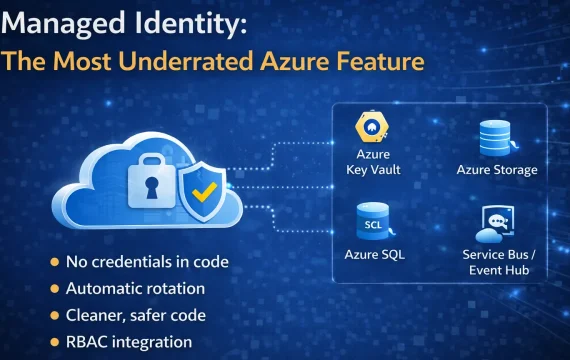
- Managed Identities: Use managed identities to allow your function app to authenticate with Key Vault and other Azure services without storing credentials. This significantly reduces the risk of credential theft.
- Automated rotation: Regularly rotate keys and credentials stored in Key Vault, and configure alerts for unauthorized access attempts.
Example: Instead of embedding a SQL connection string in your function code, configure your function to fetch it securely from Key Vault using a managed identity.
🌐 3. Restrict Network Access
Publicly accessible functions are convenient but also expose potential entry points for attackers. If your Azure Functions handle sensitive data or integrate with internal systems, securing network boundaries is essential.
Best Practices:
- Virtual Network (VNet) Integration: Connect Azure Functions to a private VNet so they can securely interact with databases, APIs, or services that are not exposed to the internet.
- Private Endpoints: Deploy private endpoints to ensure that traffic between your function and other Azure services (e.g., Storage, SQL, Cosmos DB) stays within the Azure backbone, avoiding public exposure.
- IP Restrictions: Configure IP whitelisting for known client networks and block all other requests. This is especially critical for admin-only endpoints.
- Service Endpoints: Use service endpoints to restrict traffic between your function and Azure services to specific VNets.
Example: A retail app using Azure Functions to process payment transactions should run on a private endpoint with access only from the organization’s VNet and payment processor’s IP ranges.
👥 4. Role-Based Access Control (RBAC)
Not every developer, administrator, or service should have the same level of access to your function app. Excessive permissions create unnecessary risks and increase the attack surface.
Best Practices:
- Principle of Least Privilege (PoLP): Assign only the minimum required permissions to users and services. For example, developers may need “read” access to logs but not “write” access to configurations.
- Granular Access with Azure RBAC: Define roles at the subscription, resource group, or function app level. Roles such as Reader, Contributor, or Function Developer should be carefully assigned.
- Audit Roles Regularly: Conduct periodic audits to identify unused accounts or overprivileged users and adjust roles accordingly.
- Use Just-In-Time Access: With Azure AD Privileged Identity Management (PIM), grant temporary permissions to users only when required.
Example: A finance team using Azure Functions for budget forecasting may grant “read-only” access to analysts while limiting “admin rights” to system operators.
📊 5. Monitoring, Logging & Threat Detection
Serverless environments are dynamic, making continuous monitoring a cornerstone of security. Without real-time insights, malicious activity can go unnoticed until it’s too late.
Best Practices:
- Application Insights: Enable Application Insights to track requests, dependencies, exceptions, and custom metrics within your Azure Functions.
- Microsoft Defender for Cloud: Use Defender to gain advanced threat detection and recommendations for your function apps. It can identify unusual patterns such as brute-force attempts, data exfiltration, or abnormal traffic.
- Custom Alerts: Configure alerts to trigger whenever security anomalies are detected (e.g., high failure rate of authentication requests, unusual IP access patterns).
- Centralized Logging: Send logs to a SIEM (e.g., Azure Sentinel) for cross-service correlation and incident response.
Example: If your function suddenly receives traffic spikes from unknown regions, alerts in Application Insights can flag it, and Defender can trigger an automated response.
🛡️ 6. Additional Best Practices for Hardened Security
Beyond the core pillars, organizations should consider additional practices:
- Use Deployment Slots: Deploy updates to staging environments first to validate security before going live.
- Regular Penetration Testing: Test Azure Functions endpoints for vulnerabilities such as injection attacks, weak authentication, and insecure headers.
- Data Encryption: Always encrypt data at rest and in transit. Azure Storage, Cosmos DB, and SQL Database support encryption natively.
- Compliance & Governance: Ensure your serverless workloads meet industry compliance standards like GDPR, HIPAA, or PCI-DSS, depending on your industry.
- Versioning & Dependency Management: Keep your function runtime and dependencies up-to-date to patch known vulnerabilities.
Final Thoughts
Serverless computing is powerful, but its security demands a proactive, layered approach. Azure Functions abstract away infrastructure management, but the responsibility of protecting your applications, users, and data still lies with you.
By combining identity-based security (Azure AD), secrets management (Key Vault), network restrictions (VNets and private endpoints), least privilege access (RBAC), and continuous monitoring (Insights & Defender), you can align your applications with Zero Trust and DevSecOps principles.
In the end, serverless security is not a “checkbox” task. It’s an ongoing mindset—an evolving process that must grow alongside your application’s scale and complexity. Organizations that embrace this approach will not only reduce risk but also build trust, compliance, and resilience into their digital ecosystems.