
Blogs
What are you working on?
Filter posts by topic
Latest
All posts
Showing 67–72 of 81 posts
DevOps 3 min read
Infrastructure as Code on Azure: Bicep vs. Terraform – A Developer’s Perspective
As cloud adoption accelerates, Infrastructure as Code (IaC) has become the backbone of scalable, repeatable, and secure cloud operations. Instead of manually configuring infrastructure, developers now define it in code, ensuring consistency across environments.
DevOps 3 min read
Mastering Azure Deployments: Strategies for Seamless CI/CD
In today’s software world, releasing code quickly is no longer enough. What truly matters is how reliably, securely, and repeatably you can move software from development to production.
DevOps 4 min read
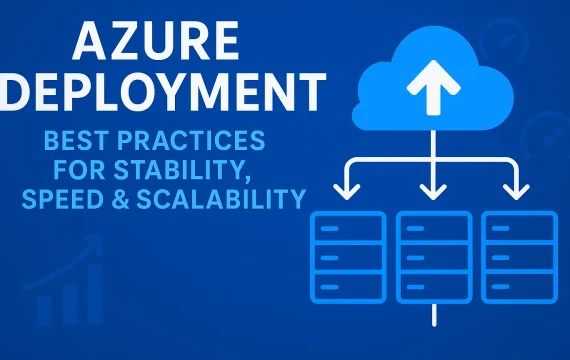
Azure Deployment: Best Practices for Stability, Speed & Scalability
In today’s digital-first world, deploying applications on Microsoft Azure is more than just “pushing code to the cloud.” Successful deployment requires a strategic balance of stability, speed, and scalability. Whether you’re building a small web app or running a global enterprise workload, following proven deployment best practices ensures higher availability, faster performance, and smoother user experiences.
Azure & Cloud 2 min read
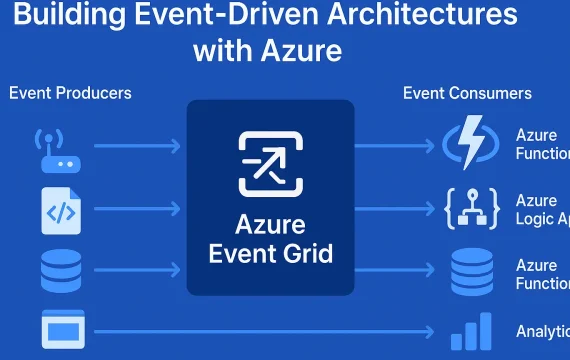
Building Event-Driven Architectures with Azure
Modern applications demand real-time responsiveness, scalability, and resilience. Traditional request-response models often struggle under unpredictable workloads. That’s where event-driven architecture (EDA) shines — enabling systems to react instantly to business events.
Azure & Cloud 2 min read
Cold Starts in Azure Functions: Strategies for Lightning-Fast Responsiveness
Serverless computing with Azure Functions brings elasticity, scalability, and cost-effectiveness. But there’s a hidden challenge many teams run into: cold starts.
Security 6 min read
Securing Your Azure Functions: Best Practices for Serverless Security
The shift towards serverless computing has transformed the way organizations build and deploy applications. Azure Functions offer developers the ability to scale on demand, reduce infrastructure overhead, and speed up innovation. However, while serverless eliminates server management, it does not eliminate security responsibilities. In fact, the dynamic and distributed nature of serverless applications introduces new attack surfaces that must be proactively managed.